How This Template Helps Your Plumbing Business
Implementing a structured checklist offers real operational and financial benefits to your plumbing firm. It moves your business from a “memory-based” service model to a “process-based” model, which is necessary for growth and consistency.
Faster, More Accurate Documentation
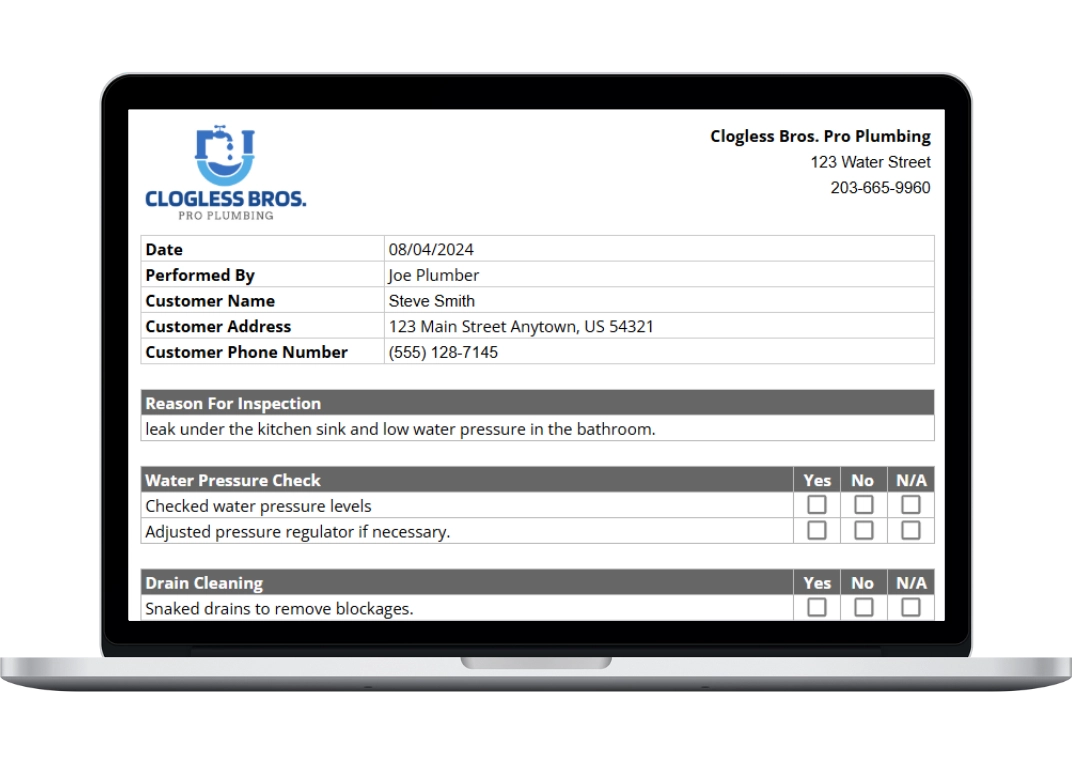
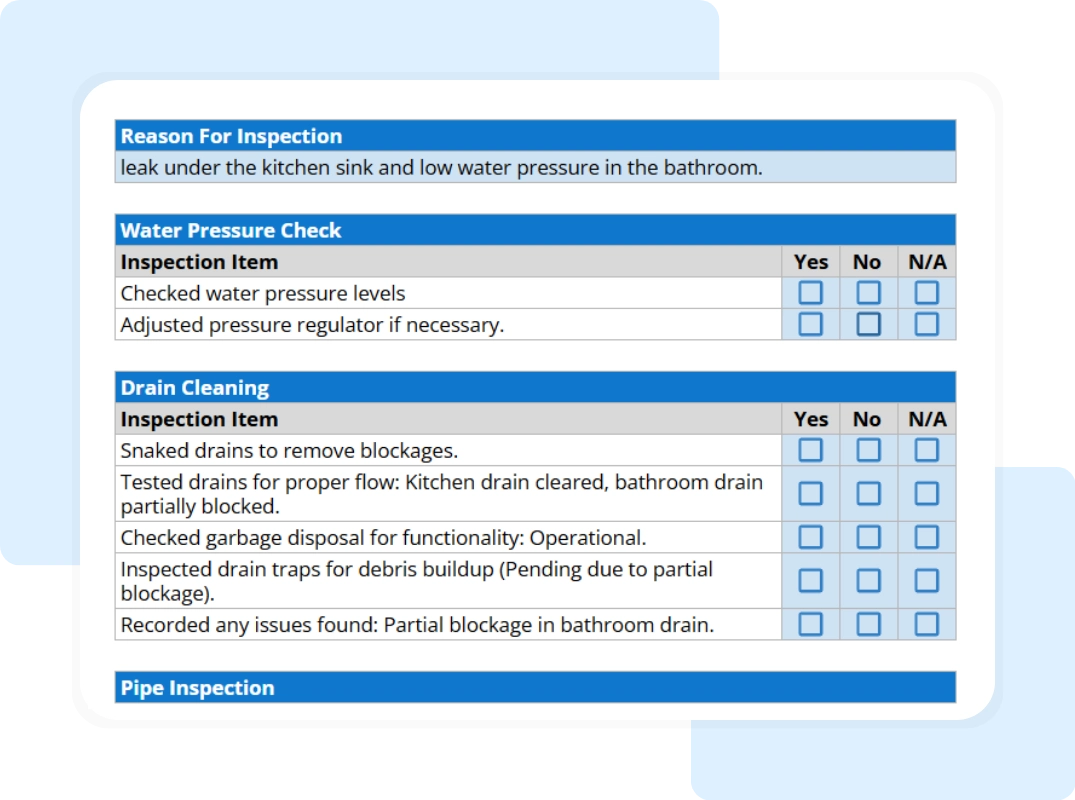
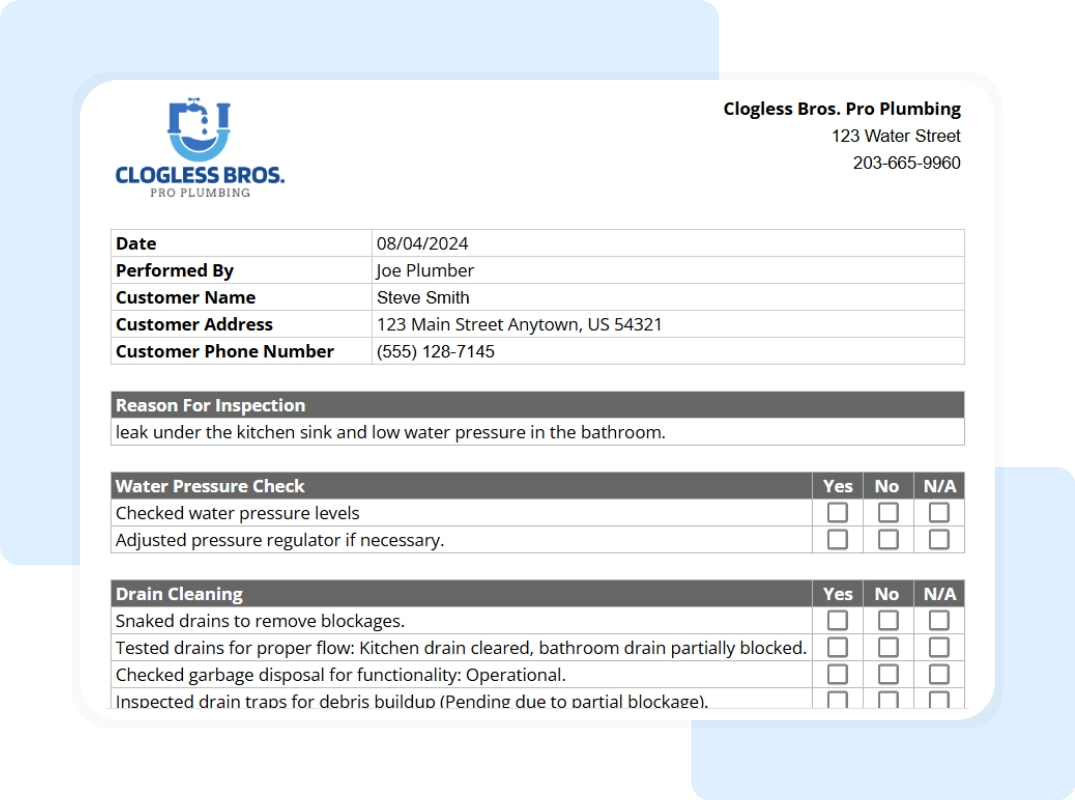
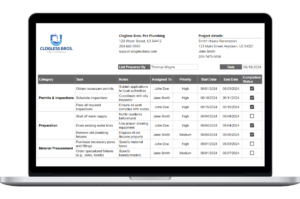
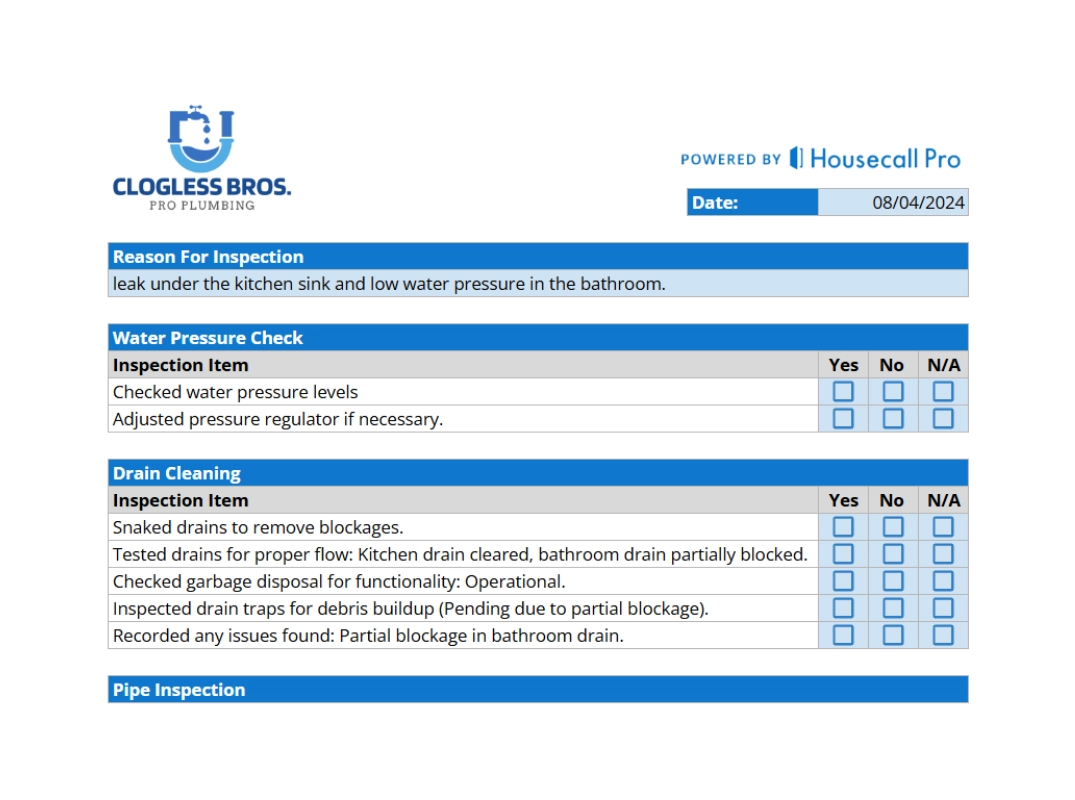
Instead of writing long-form notes from scratch, technicians simply follow the preformatted rows. This helps speed up the documentation process and ensures that no standard inspection items—like checking pipe joint signs of leakage or gas shut-off valve functioning—are forgotten in the rush of a busy day.
Consistent Service Standards
Whether you have one truck or fifty, every customer expects the same level of care. By using the checklist categories for Exterior faucets and Water Softener levels, you ensure that every technician is looking at the same things on every call. This consistency reinforces your professionalism and builds a reliable brand.
Liability Protection
A documented inspection is your best defense against claims of missed issues. By ticking False for “signs of gas leaks” or “corrosion,” you are creating a record that the system was safe at the time of service. This protection is vital for maintaining your business’s insurance standing and reputation.
Improved Sales Opportunities
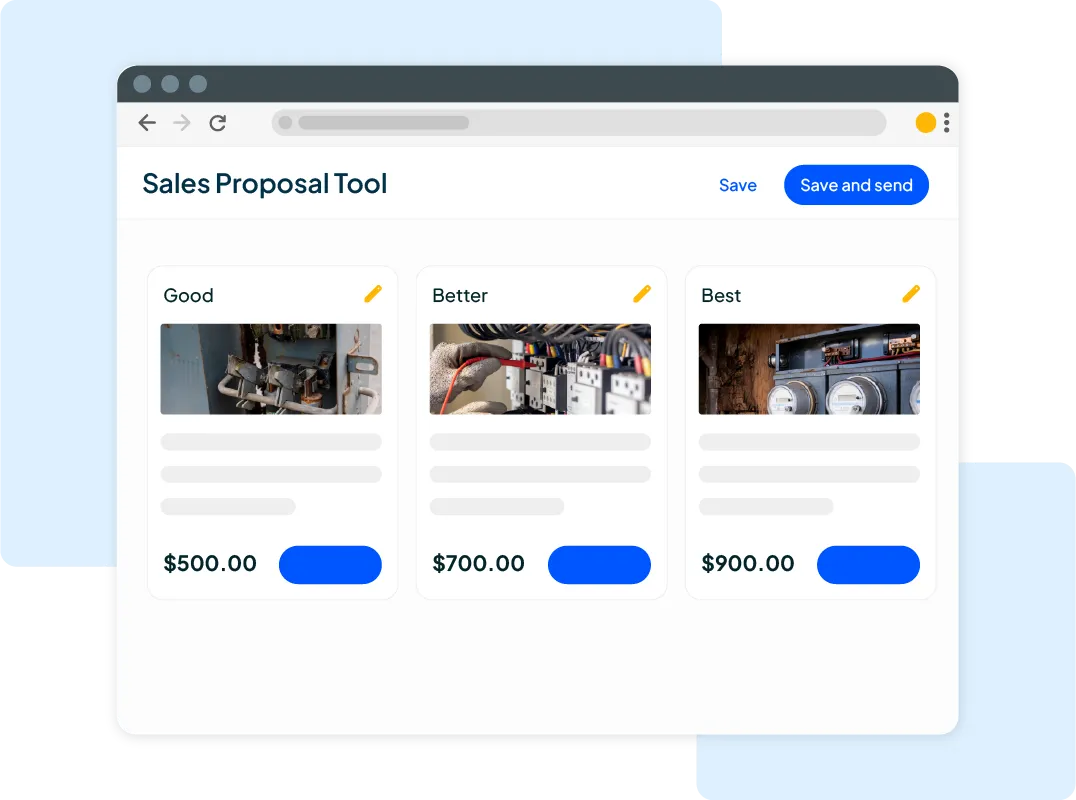
A thorough checklist often uncovers secondary issues that the customer wasn’t aware of. Finding “minor corrosion” during a Pipe Inspection allows you to suggest preventative maintenance before a catastrophic leak occurs. This proactive approach increases your average ticket size while providing a better service to the customer.
What Is a Plumbing Checklist?
A plumbing checklist is more than a list of tasks; it is a comprehensive technical reference tool that organizes the inspection logic for a technician. It serves as the primary playbook for auditing a residential or commercial plumbing system, ensuring that both visible and hidden components are evaluated for performance and safety.