Want to win more jobs with less effort?
Grow your business and send quick quotes with our home service software.

Want to see your potential revenue?
See what businesses like yours earn with Housecall Pro in 1 - 2 minutes.

Cleaning businesses can be highly profitable when set up the right way. With steady demand from homes and businesses, smart pricing, and efficient operations, you can build a business that covers costs while putting money in your pocket.
This guide covers what really matters when starting or growing a cleaning business. You’ll learn startup costs, revenue potential, pricing strategies, and the key factors that drive profitability. We’ll also highlight common mistakes that slow growth and show how to scale efficiently with the right tools and processes.
Jump ahead to each section
How profitable is a cleaning business?
Cleaning business can be very profitable because demand is steady and startup costs are low. Most companies earn 10%–28% margins, depending on the types of jobs being completed and how efficiently the business runs.
Typical cleaning business profit margins
Here’s a look at typical profit margins for different types of cleaning businesses.
Cleaning business type | Average margin |
Residential cleaning | 12%–28% |
Commercial cleaning | 10%–22% |
Vacation rental cleaning | 15%–30% |
Deep/specialty cleaning | 20%–35% |
Profit margins vary based on pricing flexibility, labor efficiency, and what customers expect to pay. Residential and commercial cleaning usually run on repeat, price-competitive work with high labor costs, which keeps margins tighter. Deep and specialty cleaning tend to be more profitable because jobs are higher-ticket, less price-sensitive, and easier to price at a premium.
*All cleaning prices in this guide are sourced from national contractor cost studies, home-services pricing benchmarks, and publicly available residential and commercial cleaning cost data, including updated reports from ZipRecruiter, HomeAdvisor, HomeGuide, Maid Central, and Swept.
Why start a cleaning business?
Starting a cleaning business is great for new entrepreneurs because it combines low startup costs, flexible hours, and steady demand in almost every market. Unlike many trades, you don’t need expensive equipment, specialized licensing, or a large team to get started, making it one of the most accessible ways to run a profitable home-services company.
Here’s a closer look at the benefits of starting a cleaning business:
- Low startup costs: Most new cleaning businesses get started for under $2,500, making it far more affordable than trades that require vehicles, tools, or certifications.
- High, consistent demand: Homes, apartments, and businesses need cleaning year-round, regardless of season or market conditions. This steady demand makes revenue more predictable.
- Fast path to profitability: Because overhead is low and jobs can be completed quickly, many new cleaning businesses break even within the first 3–9 months.
- Flexible work structure: Owners can choose their hours and scale at their own pace. Many start solo, then add employees as demand grows.
- Easy to scale: Weekly and biweekly cleans create reliable revenue, efficient routing, and a more stable workload that grows naturally over time.
- Strong upsell potential: Add-ons like deep cleans, appliance interiors, windows, and move-out services significantly increase job value without heavy investment or specialized tools.
- Recession-resistant: Research shows that homeowners and property managers often maintain cleaning services even during economic downturns because they value time savings and convenience.
Tips to start a cleaning business
Starting a cleaning business is relatively simple, but building a profitable one requires clear services, smart pricing, and reliable day-to-day systems. Follow these tips to set a strong foundation and grow your business efficiently.
→ Get more detailed, step-by-step instructions in our guide to starting a profitable cleaning business.
Expand your service gradually
Start with core services and gradually expand as your experience, team, and client base grow. This approach helps manage costs, maintain quality, and build a strong reputation before taking on more complex jobs.
- Start with basic residential cleaning to keep equipment needs low.
- Add deep cleans, move-out cleans, or turnover cleaning once your schedule starts to fill.
- Expand into commercial cleaning only when you have the staff and capacity.
- Keep a simple, standardized list of services as you grow.
- Use your Housecall Pro price book to set and maintain approved pricing.
Get a business license and insurance
Licensing and insurance protect you legally and financially from day one. Without them, you risk fines, legal issues, and out-of-pocket costs that could seriously hurt your business.
- Apply for a business license through your city or county.
- Get general liability insurance to protect against accidents and property damage.
- Consider commercial auto insurance if you drive to jobs.
- Store your documents in Housecall Pro for quick access when clients request verification.
Stock up on supplies and equipment
You can’t complete jobs efficiently without the right cleaning tools.
- Start with vacuums, mops, microfiber cloths, disinfectants, and basic PPE.
- Add specialty equipment only as needed (carpet extractors, HEPA vacuums, etc.).
- Keep supply costs low by buying in bulk or using refillable products.
- Track your spending inside Housecall Pro’s Job Costing feature to protect your margins.
Price and market your business effectively
Strong pricing and simple marketing are key to early success. Having a clear strategy will help you attract customers, focus on what matters, and grow sustainably.
- Use flat-rate pricing for residential cleaning to protect your margins.
- Research local pricing to stay competitive without undercharging.
- Build a Google Business Profile and collect reviews from early clients.
- Use referral incentives to fill your schedule quickly.
- Present professional quotes quickly using a cleaning estimate template.
Pro tip: Add approved rates to your Housecall Pro Price Book to ensure consistent margins across all estimates.
How much revenue does a cleaning business make?
Revenue depends on your team size, the types of jobs you take, and how many jobs you can fit into your schedule. Here are average revenue ranges based on cleaning company size. Keep in mind this is annual revenue, not profit.
Business size | Annual revenue* |
| Solo cleaner | $50,000–$120,000 |
2–3 employees | $120,000–$350,000 |
4–7 employees | $350,000–$750,000 |
8+ employees | $750,000–$1.5M+ |
*Data according to Zip Recruiter and BizBuySell.
How much does it cost to start a cleaning business?
Cleaning has one of the lowest startup costs of any home-service business, with most solo operators spending $600–$4,000 upfront.
Cleaning business startup cost breakdown
Here’s a look at typical startup costs for a residential or solo cleaning business:
Cost type | Typical range |
Branding & setup | $0–$500 (one time) |
Supplies & equipment | $50–$300 (one time) |
Licenses & legal fees | $100–$500 (one time) |
Insurance (general liability + bonding) | $60–$200/month |
Transportation & fuel | Varied by location and mileage |
Software | $0–$100/month |
| Marketing | $300–$2,500/month |
What affects cleaning business profitability?
Cleaning business profitability depends on how efficiently you run your operations. Pricing, productivity, overhead control, and the mix of recurring versus one-time clients all play a role in how predictable and sustainable margins are.
The following factors have the biggest impact on how much a cleaning business earns:
- Pricing strategy: Flat-rate pricing helps protect margins on variable jobs by reducing underbilling and pricing inconsistencies, especially for residential and deep-clean services.
- Labor efficiency: Scheduling, routing, and crew productivity directly affect profitability, since labor represents the largest ongoing expense for most cleaning businesses.
- Number of recurring clients: Weekly and biweekly customers create predictable revenue and reduce marketing and scheduling gaps between jobs.
- Overhead costs: Expenses such as fuel, supplies, uniforms, insurance, and administrative work can account for a significant share of total operating costs if not tracked closely.
- Service mix: Higher-ticket services like deep cleans, move-outs, and turnovers often deliver stronger per-job revenue than standard maintenance cleans.
Example: Cleaning business profit calculation
Seeing a real-world example makes it easier to understand how cleaning businesses actually make money and what drives profit. The example below shows how labor, supplies, and overhead all come together to affect your bottom line.
Job: 3-bedroom standard clean
Listed price: $160
Estimated labor cost: $70 (2 hours × $35/hr loaded labor rate)
Supplies + fuel: $15 (cleaning solutions, disinfectant, microfiber towels, mileage)
Allocated overhead: $20 (insurance, software, training, uniforms, admin time)
Full profit breakdown
Total costs: $70 + $15 + $20 = $105
Profit: $160 – $105 = $55 profit
Profit margin: $55 ÷ $160 = 34% margin
A 34% margin is strong for a standard clean and shows how quickly profits add up when labor is efficient and pricing is consistent. If drive time increases, labor runs long, or overhead isn’t properly included in the price, margins fall sharply—one reason a solid price book is essential.
Small operational improvements can push this same job closer to a 40%+ margin, such as:
- Reducing drive time with better routing
- Switching to flat-rate pricing for predictable revenue
- Offering upsells like oven or window cleaning
- Standardizing supply costs and product choices
- Using software to eliminate unpaid admin tasks
Cleaning pricing basics (hourly vs. flat-rate)

You should set pricing based on your market, the condition of the home, and the type of service you’re providing. Most cleaners use a combination of hourly and flat-rate pricing: hourly for unpredictable jobs and flat-rate for routine, repeatable services like standard, deep, or recurring cleans.
Pros of hourly pricing:
- Works well for unpredictable jobs like hoarding cleanouts or heavy deep cleans.
- Easy for customers to understand and approve.
- Prevents you from doing extra work for free, since any added time increases the cost.
Cons of hourly pricing:
- Customers may feel surprised by the final bill.
- Your revenue depends on pacing, not the value of the service.
- Harder to scale because pricing varies from job to job.
Pros of flat-rate pricing:
- Gives customers a clear idea of what they’ll pay.
- Eliminates arguments about time spent or job length.
- Produces more consistent estimates, making scheduling easier.
- Encourages efficiency because cleaners aren’t tied to the clock.
Cons of flat-rate pricing:
These factors determine the time, tools, and labor required for cleaning jobs, so they should always be worked into your pricing structure.
- Square footage
- Number of bedrooms and bathrooms
- Home condition (light, standard, heavy)
- Presence of pets
- Frequency (weekly, biweekly, monthly, one-time)
- Add-ons such as fridge, oven, cabinets, or windows
- Travel distance and drive time
Typical residential cleaning pricing
These averages give you a clear starting point for quoting standard, deep, and move-out cleans across most U.S. markets.
| Service | Average price |
Standard clean | $100–$200 |
Deep clean | $200–$400 |
Move-out clean | $250–$600 |
Add-ons | $25–$50 each |
Common mistakes that shrink profit
Even successful cleaning businesses can see their margins shrink if small operational issues go unchecked. Many of profit losses aren’t because of major failures—they’re everyday inefficiencies that quietly add cost, reduce billable hours, and make revenue unpredictable.
These are the most common issues that reduce profitability for cleaning businesses of every size:
- Underpricing jobs: Many owners underestimate labor time, cleaning difficulty, or add-ons like inside appliances or baseboards.
- Inefficient routing and excessive drive time: Driving between jobs is one of the highest hidden costs in the cleaning industry.
- Slow invoicing and inconsistent collections: Delayed invoicing leads directly to cash flow issues.
- Lack of recurring clients: Focusing only on one-off jobs forces owners into a constant marketing mode.
- Scope creep during jobs: Customers often add “quick favors” such as wiping down inside appliances, moving furniture, or cleaning extra rooms.
- High turnover and retraining costs: The cleaning industry has one of the highest turnover rates in the service sector.
- Inconsistent quality control: Callbacks, missed spots, and customer complaints add unpaid labor hours.
- Failing to raise prices over time: Inflation in supplies, fuel, and insurance grows faster than many owners adjust pricing.
How to increase cleaning business profits
Improving your cleaning business’s profits comes down to removing inefficiencies that eat at your margin and doubling down on the practices that increase revenue per hour. Companies that automate scheduling, standardize pricing, tighten routing, and build recurring clients consistently hit stronger margins.
Here are some proven strategies to strengthen profit margins year-round:
- Build recurring plans: Recurring weekly, biweekly, and monthly clients create predictable revenue and reduce marketing spend.
- Standardize your price book: A unified price book prevents underbidding, eliminates inconsistent quoting, and ensures your rates always reflect labor time and overhead.
- Reduce unpaid drive time: Routing inefficiency is one of the biggest hidden expenses in cleaning.
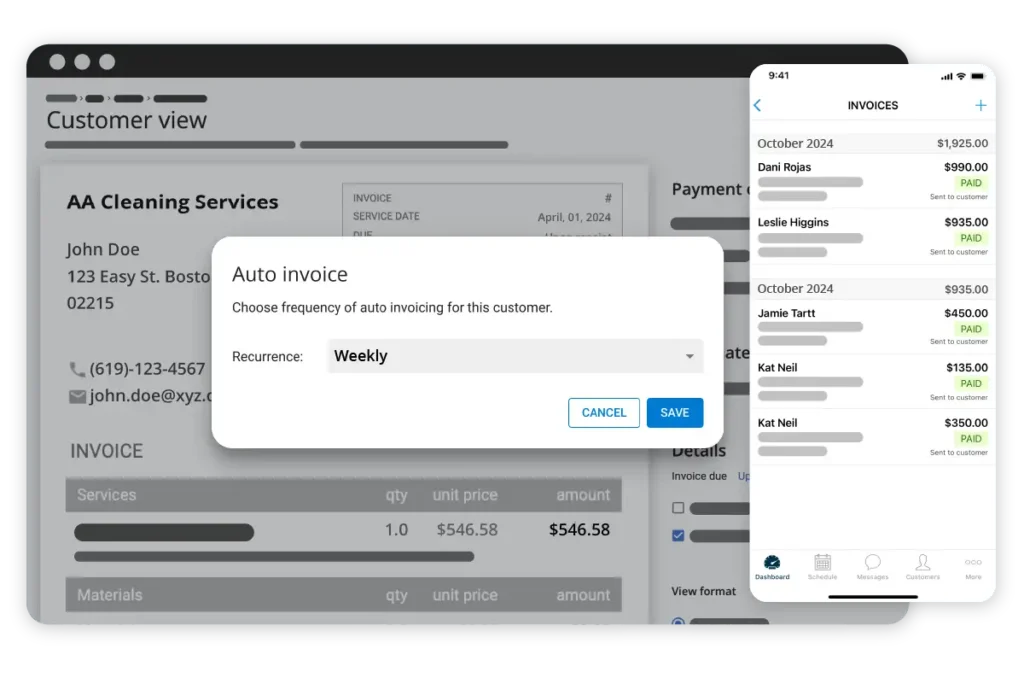
- Automate invoicing and payments: Automatic invoicing and card-on-file payments improve cash flow and cut down on unpaid or overdue balances.
- Upsell profitable add-ons: Ovens, fridges, windows, interior cabinets, and deep-cleans deliver some of the highest profit per minute because materials are cheap and labor is predictable.
- Track job costs and team performance: Monitoring labor-to-revenue ratio, job duration, and average ticket size helps you identify your most profitable services—and the ones dragging down your margins.
- Raise prices strategically: Instead of blanket increases, adjust pricing for services with low margins, higher-demand neighborhoods, or jobs that routinely require more time than expected.
- Improve employee retention: Turnover is expensive. Retaining cleaners through fair pay, predictable schedules, and clear expectations improves productivity and reduces callbacks, directly increasing job-level profit.
How Housecall Pro helps cleaning businesses stay profitable
Housecall Pro puts scheduling, estimates, dispatching, invoicing, and payments all in one place, so you can spend less time chasing admin work and more time running profitable cleaning jobs.With Housecall Pro’s cleaning software, you can:
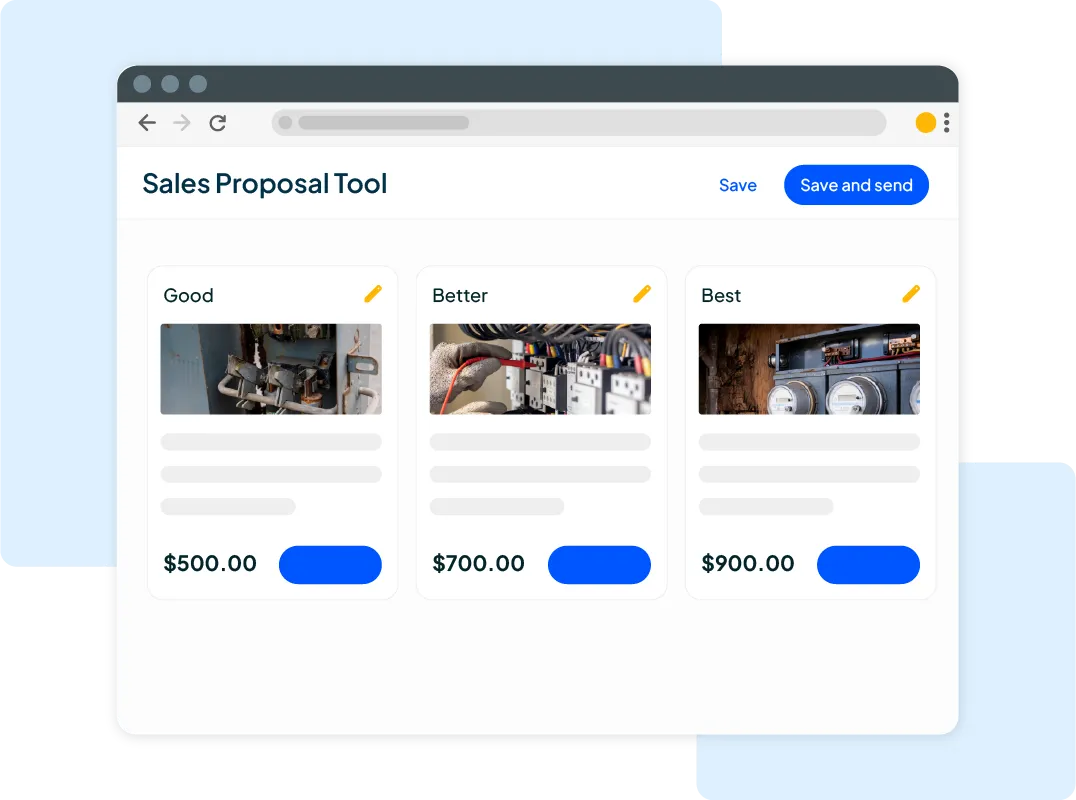
- Create digital estimates: Send professional, easy-to-approve estimates from your phone or computer.
- Automate invoicing and payments: Get paid faster with automatic invoices and card-on-file billing.
- Set up recurring cleaning plans: Lock in weekly or biweekly clients for predictable revenue.
- Track job costs and profitability: See which jobs and services actually make you money.
- Reduce no-shows: Use automated reminders to keep schedules full.
- Optimize routing and dispatching: Cut drive time and fit more jobs into each day.
Start a free 14-day trial of Housecall Pro to see how much smoother your operations can run.
-
How much do cleaning business owners make?
-
How much cleaning business owners make depends on location, pricing, and whether they work solo or manage a team. Solo cleaners often earn a solid full-time income, while owners with small crews typically increase earnings by adding recurring clients and higher-ticket services.
-
What type of cleaning is most profitable?
-
The most profitable types of cleaning are usually deep cleans, move-outs, and turnovers. These services take more time but tend to bring in higher per-job revenue than standard maintenance cleaning.
-
How long does it take for a cleaning business to become profitable?
-
Most cleaning businesses become profitable within a few months once startup costs are covered and a base of regular clients is established. Profitability comes faster when pricing and scheduling are dialed in early.
-
How can I increase profit in a cleaning business?
-
Cleaning business owners can increase profit by using consistent pricing, reducing drive time between jobs, and getting paid faster. Automating invoicing, reminders, and recurring services with tools like Housecall Pro helps protect margins as the business grows.
Get In Touch: 858-842-5746
Let us earn your trust
On average, Pros increase monthly revenue generated through Housecall Pro by more than 35% after their first year.
See plan options and feature breakdown on our pricing page.
Get a Business License and Insurance
In order to have a business properly, you need to have a business license. That license legally allows you to run the business. Without one, you can face fines and even legal action that could wind up being seriously costly.
Likewise, you need to have insurance to protect yourself, your business, and your employees. Things happen all the time, so having insurance can keep you from going into debt trying to cover things like property damage. Vehicle insurance, health insurance, general liability insurance, and other policies may be necessary, so check with a local professional.
Stock Up on Supplies and Equipment
You can’t do the job if you don’t have the right equipment. Before you can begin offering services of any kind, you need to have the right supplies and equipment. Household cleaners, specific stain removers, and equipment like mops, vacuums, etc. are all part of the job.
The last thing you need is to commit to a service without the right tools. Do your homework on what kind of equipment you’ll need, the costs, and how long it will take you to procure everything. The more services you offer, the more equipment you are likely to need.
Price and Market Effectively
Though there are other things to keep in mind when starting a cleaning business, there are two things that you must be able to do: price fairly and market effectively. If your prices are out of whack or you fail to get the word out about your business, failure is likely.
Take the time to learn about pricing structure and strategies. Likewise, think about investing in a digital marketing firm to handle your advertising needs. You would be surprised how often these two factors go together.
How to Increase Your Cleaning Business Profit
In virtually any business, there is always room to improve profitability. Whether you have just started your business or plan to launch in the near future, a little bit of help goes a long way. These tips can help increase your business’s profitability and generate more income.
Reputation is Key
At the end of the day, it doesn’t matter how affordable your services are if you don’t have a good reputation. Customers leave reviews and share information about their experiences through a litany of online avenues.
The best and most successful businesses develop a reputation for quality work. Customers want to know that they are in good hands and positive reviews are essential. Worth of mouth is still a very reliable means of marketing and the best way to garner word of mouth is by being good at what you do. Satisfied customers will spread the word and act as free marketing.
Market Your Business
You could have the best service in the world but will anyone use it if they don’t know about it? The key to any business is marketing, getting word about your business out there to the public. In the digital age, there are several ways to get the word out and increase the number of potential customers you cater to.
Social media is a great way to go, especially because it can be free. Hand out flyers and brochures. Make sure to utilize SEO marketing services as well. If you don’t feel comfortable handling these duties yourself, digital marketing services are available at reasonable rates to help give you a boost.
Outsource
No matter the business, particular administrative tasks can take time away from other integral tasks like expanding your services or acquiring leads. Rather than taking on those tasks yourself or hiring others to manage them, try outsourcing.
With cleaning business software, in particular, you can make those daily tasks streamlined. Outsource things like invoicing, scheduling, and billing to free up time for other areas of the business. It will pay off in the end and virtually eliminate common errors.
Is Starting Your Own Cleaning Business Worth It?
Is a cleaning business profitable? It can be depending on your services, prices, and how many employees you have. Make life easier by utilizing Housecall Pro’s 14-day software trial. With house cleaning business software, you can better manage your schedule, expenses, clients, and more. Most importantly, you will have the tools at your disposal necessary to turn a profit and remain profitable.