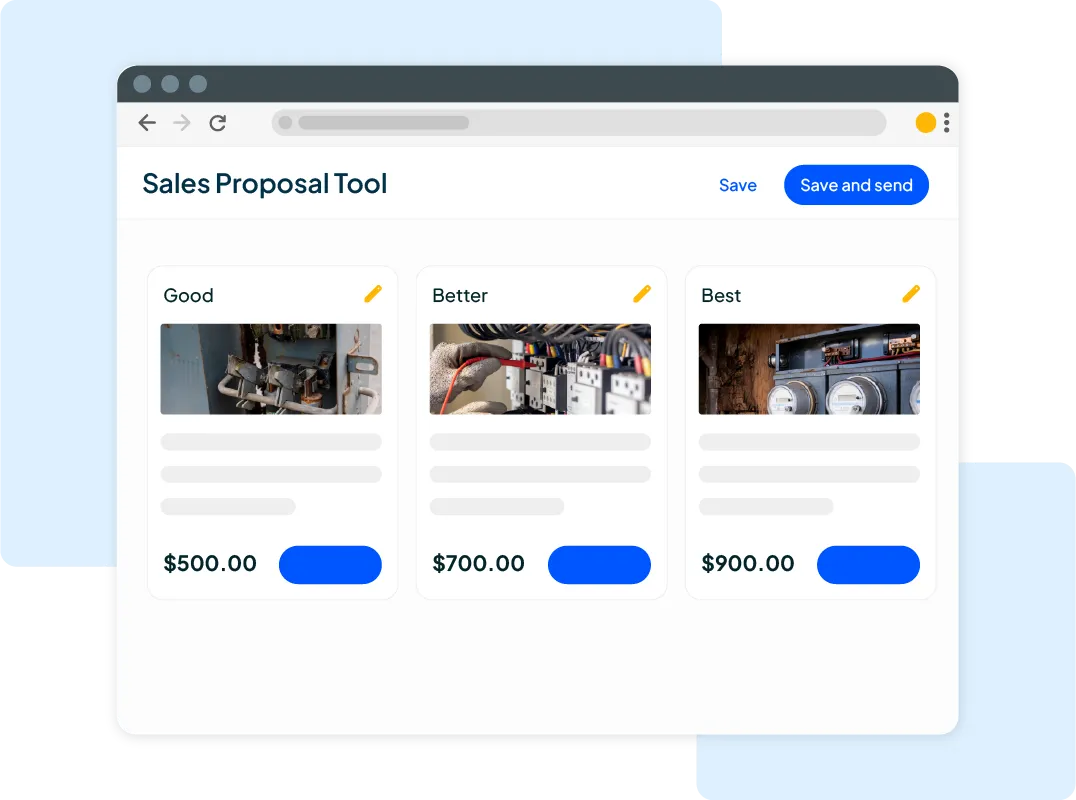
Want to win more jobs with less effort?
Grow your business and send quick quotes with our home service software.

Want to see your potential revenue?
See what businesses like yours earn with Housecall Pro in 1 - 2 minutes.

Pricing handyman jobs correctly is the foundation of a profitable business. You need to set rates that cover your expenses and protect your time while giving customers a fair, consistent experience.
To help you benchmark your costs, this guide breaks down average handyman rates in 2026. We’ll also explain how to calculate labor and overhead costs and create estimates that match the scope of each job.

Rate checker
Stop second-guessing your bids. Check your rates against market averages and get a clear picture of what you should be charging today.
Quick answer: How should you price handyman jobs in 2026?
Handyman hourly rates range from $50 to $125 per hour, depending on whether you’re self-employed or work through a company. Self-employed handymen typically charge $50–$80/hr; corporate or franchise handymen run $75–$125/hr. For flat-rate jobs with predictable scope, prices typically range from $150 to $600.
The right pricing model depends on the job type: use hourly rates for unpredictable or complex work, flat rates for common repeat jobs (ceiling fans, TV mounting, faucet replacement), and a hybrid of both for everything else. Every job should also include a minimum service fee ($125–$150) to cover travel, setup, and admin time.
Key takeaways
Here are the basics for pricing handyman jobs fairly and profitably.
Know your overhead first: Before you set any rate, calculate your monthly overhead (insurance, tools, vehicle, software) and divide by billable hours. That number is your floor for every job.
Mark up materials 20%–50%: This covers sourcing time, transportation, and warranty responsibility, not just the material cost itself.
Raise your rates when demand signals it: Booked out 2–3 weeks? That’s the clearest sign your price is too low.
Pricing data methodology
All handyman pricing data in this guide comes from HomeGuide, Angi, and Thumbtack. These sources provide verified cost averages based on thousands of completed handyman, repair, and home improvement jobs across the United States.
Rates represent 2026 national averages for handyman labor, common flat-rate services, and specialty repairs. Pricing may vary depending on:
- Local labor rates and cost of living
- Job complexity and required skill level
- Material costs and availability in your region
- Licensing requirements for electrical or plumbing work
- Demand for handyman services in your market
Actual prices may differ based on your location, scheduling availability, and the type of service being performed.
Table of contents
- Average handyman hourly rates (2026)
- What affects how much you can charge as a handyman?
- Handyman service price list
- Common handyman add-on fees
- Should you charge hourly or flat rate for handyman work?
- How to price handyman jobs step by step
- Pricing for recurring clients and maintenance plans
- When should you raise your handyman prices?
- How to keep your handyman pricing consistent as you grow
Average handyman hourly rates (2026)
Handyman hourly rates vary based on location, experience, job complexity, and specialization. Most handymen charge between $50 and $150 per hour, with the national average falling between $65 and $125 per hour.
Here’s a look at how handyman hourly rates by business type:
| Type of Handyman | Typical Hourly Rate | Notes |
| Self-employed | $50–$80 | Flexible pricing; varies by experience & demand |
| Corporate / Franchise | $75–$125 | Higher overhead, standardized pricing |
| Specialized handyman | $75–$150 | Light electrical, minor plumbing, smart home installs |
Typical U.S. handyman hourly rates by business type, 2026. Ranges reflect national averages; actual rates vary by region, experience, and job type.
Hourly rates tend to fall on the lower end in:
- Smaller towns or rural areas, where operating costs and demand are lower
- Markets with many competing handymen, which drives pricing downward
- Jobs requiring standard tools and basic skills, such as patching, painting, or minor repairs
Rates move toward the higher end in:
- Large metropolitan areas with higher living and business expenses
- Jobs requiring multi-skill expertise, like combining carpentry and electrical
- Situations where access is difficult or time-consuming, such as attic repairs or crawl spaces
Because general handyman jobs vary so widely, hourly pricing is the most common way to bill these tasks. However, many pros still use flat-rate pricing for predictable jobs to streamline estimating.
Self-employed handyman hourly rate
Self-employed handymen typically charge $50–$80 per hour, making them one of the most flexible and competitive segments of the industry. The appropriate rate depends on your experience, the types of services you offer, and how busy your schedule is. In many cases, self-employed pros set prices based on real-time demand rather than following a fixed corporate price sheet.
Hourly rates for self-employed handymen increase significantly in:
- Urban or high-cost-of-living areas, where fuel, insurance, and materials are more expensive
- High-demand markets with limited competition, especially during peak seasons or after storms
- Jobs requiring advanced troubleshooting or special tools, such as electrical diagnostics, custom carpentry, or smart home integration
Experienced solo handymen often charge as much—or more—than corporate providers because they work efficiently, diagnose problems faster, and avoid the overhead that comes with franchise operations.
Specialized handyman rates per hour
Specialized handymen handle tasks that require a higher level of expertise, specialized tools, and sometimes licensing or certifications, which justifies a higher rate. These handymen typically charge $75-$150 for tasks like light electrical work, minor plumbing, appliance installation, smart home setup, flooring repairs, or advanced carpentry.
Rates for specialized services increase when:
- Jobs involve risk, such as electrical wiring or structural changes
- Specialty tools or diagnostic equipment are needed
- The work requires certification, permitting, or code compliance
- The skill level needed exceeds basic handyman training
- Projects require advanced troubleshooting, not just installation
Customers often expect to pay more for specialized handyman services because these jobs reduce safety risks and help avoid costly mistakes. Many handymen with multi-trade expertise (carpentry, electrical, plumbing) position themselves at the premium end of the market and can charge rates comparable to licensed trades in certain scenarios.
What affects how much you can charge as a handyman?
Several factors can push your handyman pricing higher or lower. The goal is to understand what each job really costs you so you can price it fairly and still make money.
Your local market
Your local market affects what customers expect to pay and what you need to charge to stay profitable. Rates vary significantly by location—a handyman in a high-cost metro typically charges more than one in a smaller market, not because the work is harder, but because insurance, fuel, parking, and materials all cost more.
Here’s what handymen typically charge by city, based on HomeGuide data:
| City | Avg. Hourly Rate |
|---|---|
| New York, NY | $60–$125 |
| Boston, MA | $40–$125 |
| Los Angeles, CA | $60–$120 |
| San Francisco, CA | $60–$110 |
| Philadelphia, PA | $55–$90 |
| Chicago, IL | $40–$75 |
| Dallas, TX | $40–$100 |
| Houston, TX | $40–$100 |
| Miami, FL | $35–$85 |
| Austin, TX | $50–$85 |
| Minneapolis, MN | $50–$85 |
| Nashville, TN | $50–$85 |
| Denver, CO | $50–$80 |
| Atlanta, GA | $45–$80 |
| Phoenix, AZ | $35–$90 |
If your city isn’t listed, use the nearest comparable market as a baseline. Check your local market at least once a year by reviewing:
- Competitor websites for hourly rates, minimum fees, or flat-rate job pricing
- Thumbtack and Angi listings for common jobs like TV mounting, drywall repair, and fixture replacement
- Local Facebook groups to see what homeowners report paying
- Your own close rate — if every estimate gets accepted immediately, your price may be too low
Look at 5–10 local competitors before adjusting your rates. Always set your price based on your own overhead, experience, and how quickly your schedule fills.
Job complexity and time
A simple drywall patch and a multi-step repair shouldn’t use the same pricing. Jobs with more troubleshooting, specialty tools, tight access, safety risk, or customer coordination should cost more.
Price based on the actual work, not just the task name. A “door repair” can mean tightening a hinge, trimming a swollen door, replacing hardware, or fixing damage from a bad previous install.
Your overhead and cost of doing business
Your rate needs to cover more than the time you spend with tools in your hand. Overhead includes truck payments, insurance, tools, supplies, fuel, phone, software, marketing, licensing, and admin time.
A simple way to find your overhead floor is:
Monthly overhead ÷ monthly billable hours = overhead cost per hour
For example, if your monthly overhead is $2,400 and you can bill 120 hours per month, your overhead cost is $20 per hour. That means a $75 hourly labor rate really needs to become at least $95 per hour before you’ve covered business costs.
Experience and specialization
Experience helps you work faster, avoid mistakes, and explain repairs clearly to customers. Specialized skills can also support higher rates, especially when the work involves light electrical, minor plumbing, carpentry, accessibility installs, or smart home systems.
Before pricing specialized work, check your state and local licensing rules. Some areas limit how much a handyman can charge, what types of plumbing or electrical work they can perform, or whether permits are required. If the job crosses into licensed trade work, refer it out or partner with a licensed pro instead of pricing it like a standard handyman repair.
Handyman service price list

Handyman jobs vary widely, but a price list gives you a starting point for common services. Use these ranges as benchmarks, then adjust based on labor time, materials, access, and local demand.
| Handyman service | Typical price range | Pricing model |
| Small drywall repair | $150–$350 | Flat rate |
| Door hardware repair | $125–$250 | Flat rate |
| TV mounting | $150–$300 | Flat rate |
| Ceiling fan installation | $200–$450 | Flat rate |
| Light fixture replacement | $150–$350 | Flat rate |
| Faucet replacement | $200–$500 | Flat rate plus materials |
| Furniture assembly | $100–$300 | Hourly or flat rate |
| Smart thermostat installation | $150–$300 | Flat rate |
| Fence repair | $250–$750+ | Hourly or flat rate |
| Deck repair | $300–$1,500+ | Hourly or project-based |
| Minor plumbing repair | $200–$600+ | Hourly or flat rate |
| Minor electrical repair | $200–$600+ | Hourly or flat rate |
Typical U.S. handyman job costs by size, 2026.
Always confirm the scope before quoting, especially when the job involves hidden damage, customer-supplied materials, or older fixtures.
Free download: Handyman price list template
Common handyman add-on fees
Some costs don’t fit neatly into your hourly rate or flat-rate price. Add-on fees help you get paid for travel, material sourcing, urgent scheduling, disposal, and other work that happens around the actual repair.
Not every job needs every fee. Use this table to decide which costs apply before the customer approves the estimate.
| Add-on fee | Typical range | When to use it |
| Minimum service fee | $125–$200 | Small jobs that still require travel, setup, and admin time |
| Trip fee | $30–$80 | Jobs outside your normal service area or material pickup trips |
| Mileage fee | $0.30–$0.725/mile (up to the 2026 IRS standard rate) | Longer drives where distance affects profitability |
| Material markup | 20%–50% | Materials you source, transport, warranty, or return |
| Haul-away fee | $50–$150+ | Removing old fixtures, debris, furniture, or job waste |
| Same-day or after-hours fee | $50–$150+ | Urgent jobs that interrupt your normal schedule |
| Parking, tolls, or permit fees | At cost or marked up | Urban jobs, condo buildings, or permit-required work |
Add a short line to your estimates that explains these fees in plain language. For example: “Travel, parking, material pickup, and disposal fees are listed separately so you can see what’s included before work begins.”
This matters more than most pros realize: According to our 2025 Housecall Pro survey, 77% of homeowners cite hidden or surprise costs as a top frustration when hiring a service pro. A clear breakdown of fees before work starts removes that friction entirely.
How to set a handyman minimum service fee
A minimum service fee keeps small jobs profitable. Start by adding your average travel time, setup time, admin time, and one hour of labor. For many handyman businesses, that creates a minimum charge of $125–$200 before materials.
Use the minimum for small tasks like tightening hardware, replacing a basic fixture, patching a small hole, or handling one-item punch-list visits. That way, you’re not losing money on jobs that look quick but still take time to schedule, drive to, set up, complete, and invoice.
How to handle customer-supplied materials
Customer-supplied materials can make pricing tricky because you don’t control the product quality, missing parts, or return process. Make it clear that your price covers labor only if the customer provides the materials.
If a customer-supplied product is defective, incomplete, or the wrong size, extra trips or additional labor should cost more. If you supply the materials, add a markup to cover sourcing, pickup, returns, and responsibility for bringing the right item.
Should you charge hourly or flat rate for handyman work?
Hourly and flat-rate pricing both work for handyman jobs. The right choice depends on how predictable the job is, how much risk is involved, and how clearly you can define the scope before work starts.
Hourly pricing gives you flexibility when the job could change once you’re on-site. Flat-rate pricing gives customers more certainty and helps you quote repeat jobs faster. Many handyman businesses use both: hourly rates for uncertain repairs and flat rates for common jobs they’ve done many times.
When hourly pricing makes sense
Hourly pricing works best when you don’t know exactly what you’ll find until you start the job. This includes troubleshooting, older homes, hidden damage, multi-step repairs, or jobs where the customer keeps adding tasks.
Use hourly pricing for:
- Troubleshooting: Leaks, loose fixtures, wiring issues, door problems, or anything with an unknown cause.
- Older homes: Previous repairs, aging materials, or access issues can slow you down.
- Open-ended punch lists: Customers may have several small repairs but no set scope.
- Custom work: Carpentry, repair, or installation jobs may require fitting and adjustments.
Hourly pricing protects your time, but it still needs a clear minimum. If you charge $75 per hour but spend 40 minutes driving, 15 minutes setting up, and 15 minutes invoicing, a one-hour job can eat into your profit fast.
When flat-rate pricing makes sense
Flat-rate pricing works best for repeatable jobs where you already know the average labor time, materials, and risk. Customers like it because they know the price before work starts, and you avoid explaining every minute on the invoice.
Use flat-rate pricing for:
- Repeat jobs: TV mounting, ceiling fan installation, faucet replacement, furniture assembly, or smart thermostat installs.
- Clearly defined scope: You know what’s included and what costs extra.
- High-volume services: You’ve done the job enough times to know the average cost.
- Customer-friendly estimates: Upfront pricing helps reduce sticker shock.
Pro tip: Start by building flat rates for your top 10–15 most common jobs. Keep the rest hourly until you have enough job history to price them confidently.
How to calculate a flat rate from your hourly cost
Use your hourly rate as the base, then add overhead, materials, markup, and profit. Don’t set a flat rate by guessing what “sounds fair.”
Flat-rate formula:
Estimated labor hours × hourly rate + overhead + materials + material markup + profit = flat-rate price
Example: Ceiling fan installation
| Cost item | Example |
| Labor | 2 hours × $75 = $150 |
| Overhead | 2 hours × $20 = $40 |
| Materials | $25 |
| Material markup | $25 × 30% = $7.50 |
| Profit | 25% of labor + overhead = $47.50 |
| Flat-rate price | $270 |
This gives you a price that covers the work, the business costs behind the work, and the profit you need to keep going.
Free download Handyman flat rate pricing template
How to price handyman jobs step by step
To price handyman work consistently, you need a repeatable process that covers overhead, protects your margin, and produces accurate estimates for any job size.
Step 1: Calculate your overhead costs
Before you set prices, figure out what it costs to run your business each month. Overhead includes expenses that aren’t tied to one specific job but still affect your profit.
Common overhead costs include:
- Vehicle costs: Truck payment, maintenance, fuel, parking, tolls, and insurance.
- Tools and supplies: Replacement tools, blades, fasteners, drop cloths, and consumables.
- Business insurance: General liability, workers’ comp, or other required coverage.
- Phone and software: Scheduling, estimating, invoicing, and customer communication tools.
- Marketing: Website, ads, business cards, yard signs, and lead platforms.
- Admin time: Estimating, invoicing, messaging, bookkeeping, and supply runs.
Use this formula:
Monthly overhead ÷ monthly billable hours = overhead cost per hour
If your monthly overhead is $2,400 and you can bill 120 hours per month:
$2,400 ÷ 120 = $20 overhead per hour
That means you need to add at least $20 per billable hour just to cover business costs.
Learn more: Handyman labor cost calculator
Step 2: Choose a pricing model and set your rate
Your pricing model shapes how customers perceive your value and how predictable your income is. Choose a model based on how much uncertainty the job has. Use:
- Hourly pricing: For troubleshooting, punch lists, older homes, or jobs with unclear scope.
- Flat-rate pricing: For repeatable jobs like TV mounting, ceiling fan installation, furniture assembly, or fixture replacement.
- Hybrid pricing: Charge flat rates for your top 10–15 most common jobs and hourly for everything else.
Once you’ve chosen a model, set your rate using three numbers: overhead cost per hour (from Step 1), your desired wage, and a profit margin.
Overhead per hour + desired wage = subtotal × 1.15–1.20 = your rate
Example: $20 overhead + $55 wage = $75 × 1.15 = $86/hr
The 15%–20% margin is what funds slow weeks, equipment replacement, and growth. Without it, you’re covering costs but not building a business.
Pro tip: If you’re just starting out, price at the lower end of your local market until you have 10–15 reviews. Once you’re consistently booked 1–2 weeks out, raise your rate in $10–$15/hr increments.
Step 3: Adjust your pricing based on job complexity
Not all jobs require the same time, tools, or risk. A job that looks simple in photos can become more complicated once you see the wall, fixture, flooring, framing, wiring, or previous repair work.
Add 20%–30% when:
- Access is difficult: Attics, crawl spaces, ladders, tight closets, or awkward work areas.
- The job has safety risk: Electrical, plumbing, heavy lifting, or overhead work.
- The scope is unclear: The customer can’t fully explain the issue before you arrive.
- Old materials are involved: Older homes may have stripped screws, uneven framing, outdated fixtures, or previous repairs.
Step 4: Add fees to protect your profit
Fees help cover the unbillable time every job requires. These may include:
- Minimum service fee ($125–$150): Covers travel, setup, admin, and up to one hour of labor.
- Trip fee ($60–$70): Compensates for drive time and vehicle wear on out-of-area jobs.
- Material markup (20%–50%): Covers sourcing, transportation, and return risk.
Always be transparent with customers about when fees apply.
Example: A customer 30 minutes away wants a single faucet replaced. You’d apply a minimum service fee of $125 plus a $60 trip fee before materials. That way, the job is profitable no matter how simple the repair turns out to be.
Step 5: Build an itemized estimate
An itemized estimate helps customers understand what they’re paying for. It also protects you if the job changes after work begins.
A strong handyman estimate should include:
- Labor: Hourly rate, estimated hours, or flat-rate labor cost.
- Materials: Customer-supplied or pro-supplied materials.
- Markup: Any material markup or sourcing fee.
- Add-on fees: Travel, disposal, parking, permits, or after-hours charges.
- Scope notes: What’s included and what’s not included.
- Approval terms: How changes, extra work, or delays will be handled.
Once the estimate is built, explain it in terms customers care about: what’s included, what could change, and when you’ll ask for approval before doing extra work.
Try language like:
“This estimate includes labor, standard setup and cleanup, material sourcing, and the time needed to complete the repair correctly. If we find hidden damage or the scope changes, I’ll explain the options before doing extra work.”
That type of explanation helps customers see the value without making the estimate feel defensive.
Free download: Handyman quote template
Step 6: Review and adjust rates annually
Review your rates at least once a year. Costs change, your experience grows, and some jobs become more profitable than others.
Look at:
- Accepted estimates: Which prices get approved quickly?
- Rejected estimates: Are customers pushing back on price or unclear scope?
- Actual job time: Which jobs take longer than expected?
- Material costs: Are supplies, fuel, and insurance going up?
- Profit by service: Which jobs are worth repeating?
Use that information to adjust your hourly rate, flat-rate jobs, fees, and minimum service charge.
If you’re quoting from memory or digging through old invoices to remember what you charged last time, this is where software can help. Housecall Pro helps handyman businesses save repeat services, build estimates from the field, and keep job details connected to invoices and payments, so your pricing process is easier to repeat from one job to the next.
Get In Touch: 858-842-5746
Let us earn your trust
On average, Pros increase monthly revenue generated through Housecall Pro by more than 35% after their first year.
See plan options and feature breakdown on our pricing page.
When should you raise your handyman prices?
Raise your handyman prices when your current rates no longer match your costs, schedule, or skill level. A rate increase doesn’t have to be dramatic. Even a $5–$10 hourly increase or a 10% bump on your most common flat-rate jobs can make a big difference over time.
Consider raising your prices when:
- You’re booked out more than three weeks: Strong demand usually means your price is too low or your schedule is too full.
- Your material costs rise more than 10%: If materials, fuel, insurance, or tool costs go up, your pricing should reflect that.
- You haven’t raised rates in over a year: Review your prices at least annually so inflation doesn’t shrink your profit.
- Competitors charge more and still win jobs: Customers may be paying for speed, trust, communication, or professionalism.
- You’ve added a specialized skill: Smart home work, light electrical, minor plumbing, carpentry, or accessibility installs can justify a higher rate.
Don’t worry about scaring off customers; raising prices is an expected part of any service business. “The biggest thing with your customers is connection and honesty. That’s more important than price,” says John H., a Housecall Pro business coach and owner of Hagner HVAC. “You can’t be ridiculous, but if you’re a few hundred dollars more than the next guy and they liked you and the other guy was just in and out, they’re going to more likely go with you.”
When you raise rates for existing clients, keep the message simple:
“Starting next month, my hourly rate will be $85 because material, insurance, and vehicle costs have increased. I’ll continue honoring current estimates, and I’ll always confirm pricing before new work starts.”
Give repeat customers 2–4 weeks of notice, honor already-approved estimates, and apply the new rate to future work. That gives customers time to adjust without making you apologize for running a sustainable business.
Read more: Price increase letter sample
Pricing for recurring clients and maintenance plans
Recurring handyman work can help fill your schedule with steadier income, but it still needs to protect what you actually take home. Don’t discount recurring work so heavily that you’re doing more visits for less money.
A simple maintenance plan usually works best when it bundles predictable tasks, such as seasonal home checks, caulking touch-ups, filter changes, fixture tightening, smoke detector checks, minor drywall repair, and small punch-list items.
Here are a few ways to structure recurring handyman pricing:
| Plan type | Best for | Example pricing structure |
| Monthly maintenance visit | Property managers, landlords, busy homeowners | 2-hour monthly visit at your standard hourly rate or a set flat rate |
| Quarterly home checkup | Homeowners who want preventive maintenance | Seasonal inspection plus small repairs, priced as a flat visit fee |
| Punch-list package | Customers with several small tasks | Prepaid 4–8 hour labor block with materials billed separately |
| Preferred client rate | Repeat customers | Small labor discount |
A recurring plan should feel like convenience, not a subscription trap. Frame it around fewer surprise repairs, faster scheduling, and keeping small problems from becoming bigger ones.
For example, instead of saying, “Sign up for a monthly plan,” say: “I can stop by once a quarter, handle the small repairs that pile up, and flag anything that could become expensive later.”
Read more: Preventive maintenance plan examples and pricing ideas
How to keep your handyman pricing consistent as you grow
Pricing a job accurately is only half the work—the other half is making sure those prices hold up across every estimate, invoice, and customer. Housecall Pro’s handyman software keeps that side of the business organized. With it, you can:
- Build a custom price book with flat rates for your most common jobs, so every estimate starts from the same baseline instead of a gut feeling.
- Convert estimates to invoices in one click and accept credit cards, ACH, or mobile payments without switching tools.
- Track labor, materials, and markups automatically so your actual job costs stay aligned with what you charged.
- See which jobs are most profitable using built-in dashboards, so you can raise rates where it makes sense and stop undercharging on repeat work.
Start a free 14-day trial and see how much easier pricing gets when your tools do the math.

Handyman job pricing FAQ
-
How do I price complex handyman jobs?
-
To price complex handyman jobs, break the project into smaller tasks and estimate the labor, materials, and time required for each one. Add your overhead, apply your markup, and include a buffer for unexpected issues. For high-variability jobs, offer a range or a “not-to-exceed” estimate to protect your profit
-
How should I bill for handyman services?
-
You can bill for handyman services by charging an hourly rate, a flat per-project rate, or a minimum service fee. Choose the method that best fits the job’s complexity and your market. Always include labor, materials, overhead, and markup in the price to ensure you stay profitable.
-
How can I explain higher handyman rates to customers?
-
To explain higher handyman rates to customers, highlight the costs behind your pricing—including your experience, quality of work, insurance, licensing, travel time, tools, and overhead. Customers appreciate transparency. Showing an itemized estimate helps them see the value behind your pricing and why it ensures reliable, professional service.
-
What is a good profit margin for handyman services?
-
Most handyman businesses aim for a net profit margin of 20%–40%. Solo operators often fall on the higher end because they don’t have employee payroll expenses cutting into profits.
The biggest threats to profitability are unpaid drive time, jobs that grow beyond the original scope, and pricing work too low. To protect your margins, group jobs in the same area whenever possible, confirm the full scope before you arrive, and charge appropriately for specialized services like drywall repair, appliance installation, and trim carpentry.
-
Should I charge a minimum service fee as a handyman?
-
Yes, you should charge a minimum service fee as a handyman because it protects your time on short tasks that still require travel, scheduling, and setup. Most handymen charge $75–$200 depending on their market.
-
How do I calculate my hourly handyman rate?
-
To calculate your hourly handyman rate, divide your monthly overhead by your monthly billable hours to get your overhead cost per hour. Add your desired hourly wage. Example: $2,400 overhead ÷ 120 hours = $20/hr overhead. Add $55/hr desired wage = $75/hr rate. Most handymen land between $50–$125/hr using this method.
-
How do I price materials for handyman jobs?
-
To price materials for handyman jobs, apply a 20%–50% markup to cover sourcing, transportation, and warranty handling. This markup is standard across the home service industry. Always itemize materials in your estimate to keep customers informed.
-
Should handymen charge differently for emergency or same-day jobs?
-
Yes, handymen should charge differently for emergency or same-day jobs because urgent work requires immediate scheduling and often disrupts your planned workflow. Many pros add a $50–$150 premium for same-day or after-hours jobs. Be clear about emergency fees before arriving on-site
-
Does location affect how much a handyman should charge?
-
Yes. A handyman in San Francisco or New York might charge $90–$120/hr, while the same work in a midsize Midwest city might run $55–$75/hr. Higher cost-of-living areas drive up insurance, fuel, and labor costs, which pushes rates up. Use local job boards or Thumbtack to benchmark rates in your specific market.
-
How do I price a multi-day handyman job?
-
For jobs spanning multiple days—a deck repair, a bathroom refresh, or a full punch list—switch from hourly to a project rate. Estimate your total hours, apply your hourly rate, add materials with markup, then quote a flat project price. Example: a 3-day deck repair at $75/hr × 8 hrs/day = $1,800 labor + $400 materials = $2,200 total. Collect a 30%–50% deposit upfront to cover materials, with the balance due on completion. Put any change orders in writing before adding scope; verbal approvals on multi-day jobs are where pricing disputes start.